
You know, after spending over fifteen years tracking pack dynamics in India’s dense national parks, I’ve come to realize that few animals are as misunderstood as the indian wild dog (Cuon alpinus), commonly known as the dhole. Many people underestimate the role of dholes in maintaining ecosystem balance — they’re critical for controlling prey populations, yet they rarely get the spotlight reserved for tigers or leopards.
Honestly, I’ve found that public awareness about the Indian wild dog is often skewed; they’re not just a lesser-known species but a fascinating part of our biodiversity. The misconception that dholes are ferocious predators can overshadow their complex social behavior and intelligence. In this comprehensive guide, I will walk you through the ecology, social structure, hunting mechanics, and pressing conservation needs of this extraordinary apex pack hunter.
Key Takeaways
• Ecological Linchpins: The indian wild dog plays an essential role in regulating herbivore populations across South and Southeast Asian forests.
• Vocal Communicators: Known as “whistling dogs,” dholes rely on high-pitched whistles and vocalizations to coordinate complex group movements across dense vegetation.
• Unique Pack Structure: Unlike wolves, dholes exhibit multi-male and multi-female social groups where aggression is remarkably minimal and communal care of pups is standard.
• Threat Landscape: Habitat fragmentation, prey depletion, and disease transmission from domestic canids pose severe risks to their survival.
Table of Contents
- Overview of the Indian Wild Dog (Cuon alpinus)
- Pack Dynamics and Social Hierarchy
- Hunting Mechanics and Prey Availability
- Conservation Status and Modern Threats
- Observing Dholes Safely: Field Guidelines
- Frequently Asked Questions (FAQ)
Overview of the Indian Wild Dog (Cuon alpinus)
Taxonomy and Evolutionary Lineage
The indian wild dog stands out in the family Canidae. Classified under the genus Cuon, it is distinct from members of Canis (such as grey wolves, jackals, and domestic dogs) due to specialized dentition adapted for hypercarnivory.
| Feature / Trait | Indian Wild Dog (Dhole) | Grey Wolf (Canis lupus) | Feral Domestic Dog (Canis familiaris) |
|---|---|---|---|
| Scientific Name | Cuon alpinus | Canis lupus | Canis lupus familiaris |
| Molar Tooth Count | 40 teeth ( reduced lower molars) | 42 teeth | 42 teeth |
| Teat Count | 12 to 14 teats | 8 to 10 teats | 8 to 10 teats |
| Pack Behavior | Highly cooperative, low intraspecific aggression | Hierarchical dominance | Variable, rarely cohesive long-term |
| Vocal Strategy | Whistles, squeaks, clucks | Howls, barks | Barks, howls |
Physical Adaptations and Distinctive Characteristics
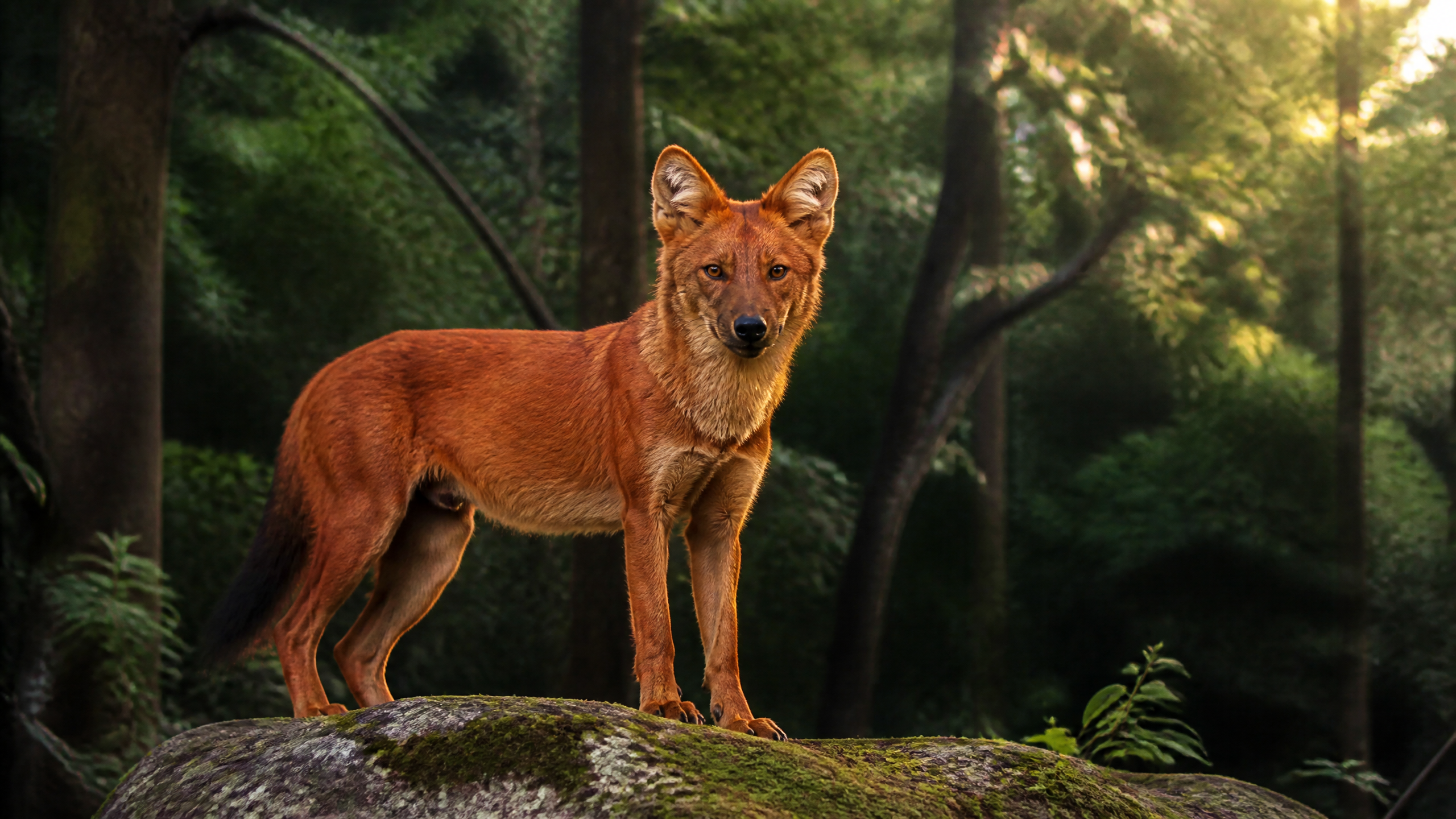
Dholes sport a striking reddish-brown or rusty coat with a dark, bushy tail and rounded ears. Their physical build is tailored for endurance running rather than explosive sprinting.
• Coat Variations: Ranges from dark rust red in moist forest zones to paler buff colors in drier regions.
• Body Weight: Adult males typically weigh between 15 to 20 kg (33 to 44 lbs), while females average 10 to 15 kg (22 to 33 lbs).
• Dental Adaptation: Reduced molar count allows for a sharper shear action, optimizing meat processing during communal feeding.
Pack Dynamics and Social Hierarchy
The Whistling Hunters: Communication Patterns
Communication within a dhole pack is one of the most intriguing phenomena in wildlife ecology. In the thick teak and bamboo forests of Bandipur or Pench, visual signals are quickly lost. Dholes solve this by using unique high-pitched whistles.
• Re-grouping Whistles: High-frequency sounds that carry over 500 meters without alerting potential prey.
• Alarm Calls: Sharp, repetitive squeaks warning the pack of nearby megag herbivores like elephants or rival tigers.
• Chitters and Clucks: Soft, reassuring noises exchanged during pup feeding and social grooming.
Hierarchy and Reproduction within Dhole Packs
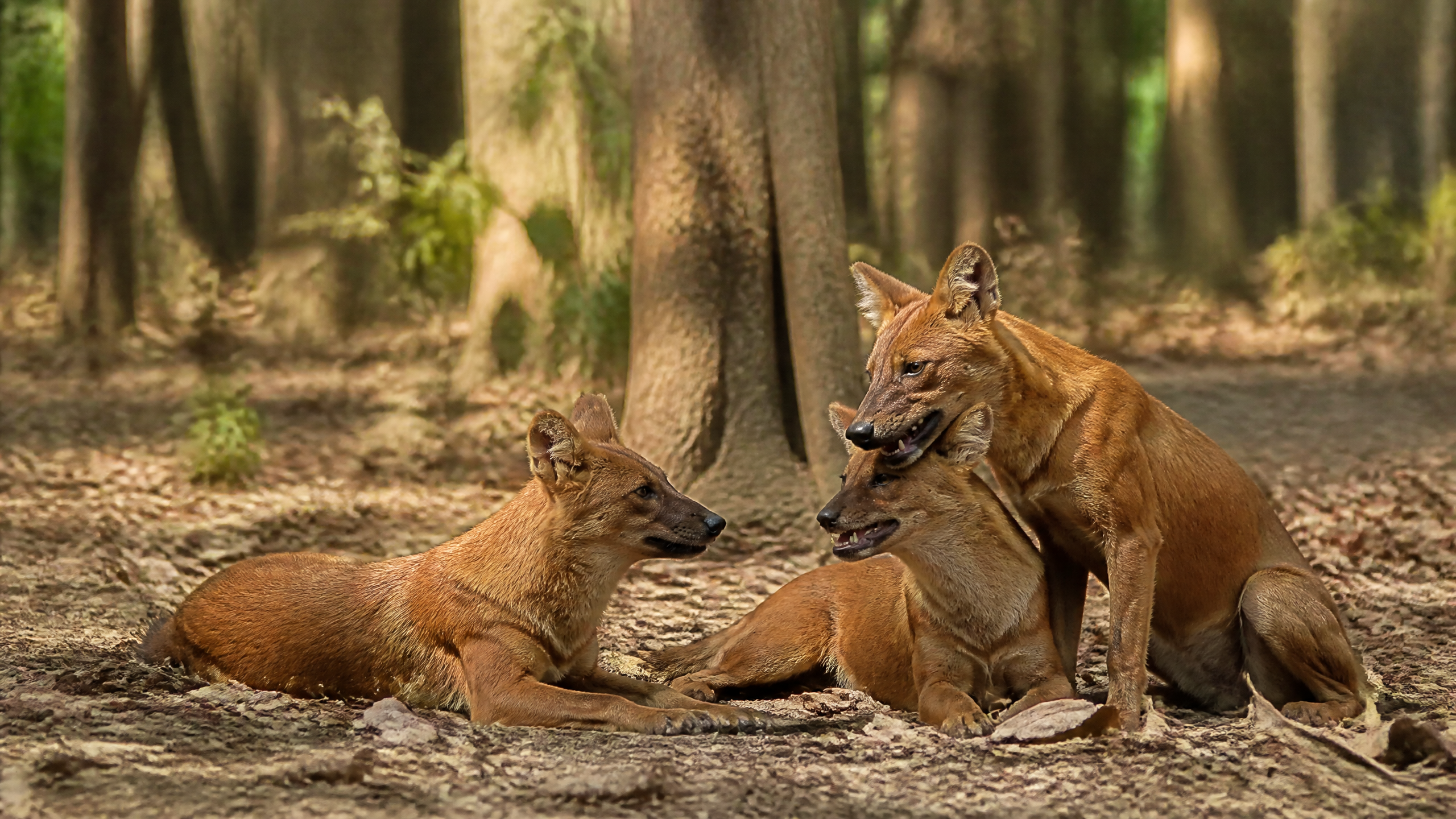
In my years of field research, I’ve observed that dhole packs operate with surprisingly little internal conflict. Unlike wolf packs where dominance fights can be brutal, dholes manage social structure through play, mutual grooming, and shared responsibility.
- Dominant Breeding Pair: Usually only one female breeds per pack, though all pack members assist in raising the litter.
- Communal Pup Care: Helpers regurgitate food for nursing mothers and pups, remaining at dens while the main pack hunts.
- Packs Size Dynamics: Packs typically average 5 to 12 individuals, though historical records cite super-packs exceeding 20 members where prey availability was abundant.
Hunting Mechanics and Prey Availability
Cooperative Hunting Strategies
Cooperative hunting in dholes is a masterclass in strategy. Rather than ambushing prey, a pack will stalk quietly before initiating a relentless endurance chase.
• Relay Pursuits: Pack members take turns pacing the target to exhaust fast ungulates.
• Flanking Tactics: Sentinels drive prey toward water bodies or natural choke points where waiting pack mates intercept them.
• Rapid Consumption: A pack can consume a medium-sized deer in under 15 minutes, minimizing exposure to kleptoparasitism by tigers or leopards.
Prey Preference and Ecosystem Impact
Prey availability dictates dhole density and territoriality. Their diet centers around medium-to-large ungulates.
| Region | Primary Prey Species | Secondary Prey Species | Ecosystem Impact |
|---|---|---|---|
| Western Ghats (India) | Axis Deer (Chital), Sambar Deer | Indian Muntjac, Wild Boar | Prevents overgrazing of forest understory |
| Central India | Chital, Sambar | Nilgai, Gaur calves | Maintains balanced herbivore demography |
| Northeast India / Southeast Asia | Sambar, Barking Deer | Serow, Wild Pig | Controls wild ungulate disease vectors |
Conservation Status and Modern Threats
Habitat Fragmentation and Human Conflict
The IUCN classifies the indian wild dog as Endangered. The global population is estimated at fewer than 2,500 mature individuals.
- Fragmentation of Habitats: Linear infrastructure (roads, railways) splits contiguous forest corridors, isolating packs and depressing genetic health.
- Depletion of Prey: Unregulated livestock grazing and poaching reduce natural ungulate populations, forcing dholes into agricultural fringes.
- Persecution: Historical bounty hunting and accidental poisoning by cattle herders retaliating for livestock loss continue to suppress recovery.
Disease Transmission from Domestic Canids
Dholes are extremely vulnerable to pathogens transmitted by feral domestic dogs roaming near forest boundaries.
• Canine Distemper Virus (CDV): Highly contagious and capable of wiping out entire packs in a matter of weeks.
• Rabies: Endemic in unvaccinated domestic populations, posing an existential threat to sympatric dhole packs.
• Parvovirus: Disrupts pup survival rates, severely limiting pack recruitment over consecutive seasons.
Observing Dholes Safely: Field Guidelines
What NOT to Do During Wildlife Observations
Before sharing where to spot dholes, let me emphasize what NOT to do during forest safaris:
• Do NOT pursue or crowd animals: Chasing a running pack with a safari vehicle causes severe stress and disrupts active hunts.
• Do NOT use playbacks or call mimics: Attempting to whistle back to dholes causes distress and alters natural pack communication.
• Do NOT leave vehicles near active den sites: Den disturbance can lead mothers to abandon vulnerable pups or relocate them to sub-optimal areas.
Recommended National Parks for Ethical Observation
For responsible wildlife enthusiasts, India offers exceptional opportunities to observe dhole behavior in protected landscapes:
- Nagarhole National Park (Karnataka): Offers some of the highest recorded dhole densities in South India.
- Tadoba Andhari Tiger Reserve (Maharashtra): Excellent open dry deciduous habitat providing clear visibility of hunting behavior.
- Pench National Park (Madhya Pradesh): Renowned for well-studied packs inhabiting classic teak canopy terrain.
Frequently Asked Questions (FAQ)
Are Indian wild dogs dangerous to humans?
No. There are no authenticated historical or modern records of wild dholes attacking humans. They are naturally shy around human presence and actively avoid human encounters whenever possible.
How do dholes differ from stray or feral domestic dogs?
Dholes (Cuon alpinus) are an entirely distinct wild species characterized by 40 teeth (compared to 42 in domestic dogs), distinctive whistled calls, reddish coats, bushy dark tails, and strict pack-oriented social structures.
Why are dholes listed as Endangered on the IUCN Red List?
Dholes face compounding threats including habitat fragmentation, severe loss of wild prey, direct conflict with livestock owners, and exposure to lethal domestic dog diseases like Rabies and Canine Distemper.
Do dholes compete directly with tigers and leopards?
Yes. Dholes share habitats and prey bases with tigers and leopards. While a single tiger can kill an individual dhole, a large dhole pack can occasionally force a leopard off its kill or defend their own prey against big cats through sheer strength in numbers.
References and Ecosystem Insights
Understanding the indian wild dog requires viewing them not as competitors to big cats, but as vital drivers of forest vitality. By keeping ungulate populations dynamic and vigilant, dholes prevent overgrazing and maintain plant biodiversity across tropical forest ecosystems. Protecting their migratory corridors and managing domestic canine diseases along reserve boundaries remain our vital duties to ensure these remarkable whistling hunters continue to echo through India’s wild forests.